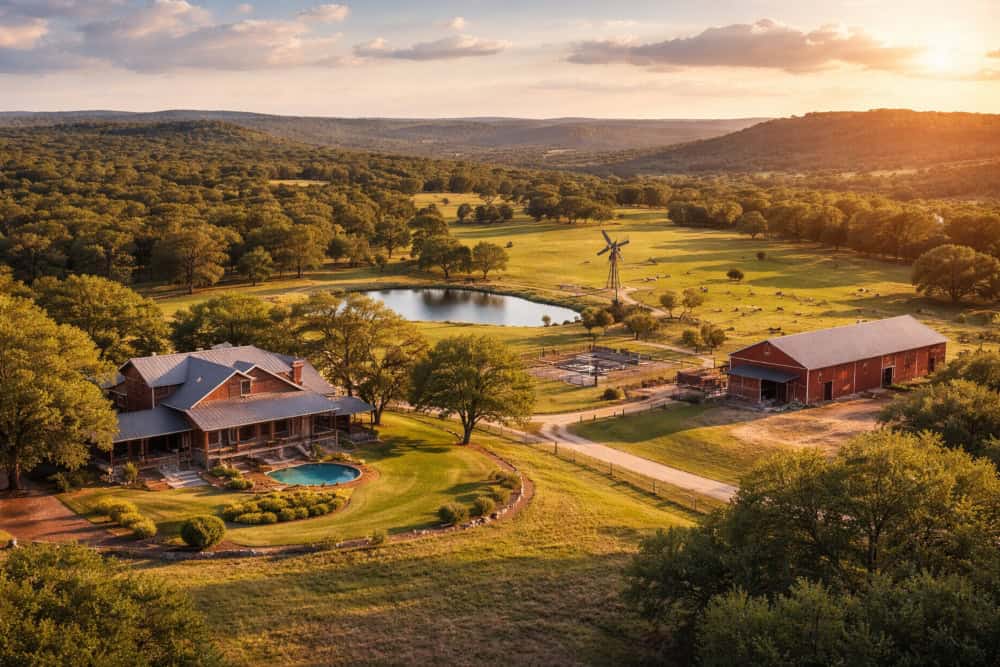
Texas offers a wide range of ranch properties, each serving different purposes depending on land use, improvements, and long-term goals. For buyers exploring ranches in areas like Austin, San Antonio, Boerne, New Braunfels, and Fredericksburg, understanding these distinctions is essential to making an informed decision.
This guide breaks down the three primary ranch categories: recreational, working, and investment, along with what to look for in each.
What Are the Main Types of Ranches in Texas?
Ranches in Texas are typically categorized based on how the land is used. The three most common types include:
- Recreational ranches
- Working ranches
- Investment ranches
Each type varies in infrastructure, acreage, and operational requirements.
Recreational Ranches in Texas
Recreational ranches are designed primarily for leisure use and outdoor activities.
Common Uses
- Hunting and wildlife observation
- Fishing and water-based activities
- Trail riding and outdoor recreation
Property Features
- Natural terrain with native vegetation
- Water features such as ponds, creeks, or rivers
- Cabins or residential structures for short-term stays
What Buyers Should Consider
- Wildlife management practices and habitat conditions
- Access to water sources
- Property accessibility and road infrastructure
Recreational ranches are often located throughout the Texas Hill Country, including areas near Fredericksburg and Boerne, where natural landscapes and open land are widely available.
Working Ranches in Texas
Working ranches are income-producing properties used for agricultural operations.
Common Uses
- Livestock grazing (cattle, sheep, goats)
- Crop production
- Hay operations
Property Features
- Fencing and cross-fencing systems
- Barns, equipment storage, and handling facilities
- Reliable water infrastructure such as wells or tanks
What Buyers Should Consider
- Soil quality and land productivity
- Existing agricultural exemptions or valuations
- Operational costs and labor requirements
Working ranches require ongoing management and are typically evaluated based on their ability to support agricultural production.
Investment Ranches in Texas
Investment ranches are purchased with a focus on long-term value, income potential, or land appreciation.
Common Uses
- Land banking and appreciation
- Lease income (hunting, grazing, or recreation)
- Future development or subdivision (where permitted)
Property Features
- Strategic location near growing markets like Austin or San Antonio
- Road frontage and access to utilities
- Flexible land use potential
What Buyers Should Consider
- Local zoning and land use regulations
- Market trends and regional growth patterns
- Property tax considerations and exemptions
Investment ranches may overlap with recreational or working uses but are evaluated primarily on financial performance and future potential.
How to Choose the Right Type of Ranch
Selecting the right ranch depends on how you plan to use the property. Key questions to ask include:
- Will the property be used for personal recreation, income generation, or both?
- What level of maintenance and management is required?
- Are there specific land features or improvements needed?
Many buyers prioritize a combination of uses, such as recreational enjoyment with supplemental income through leasing or agriculture.
Texas Ranch Buying Considerations
Regardless of ranch type, several factors apply to all purchases:
Water Access
Water availability is one of the most important elements of any ranch property, whether for livestock, recreation, or long-term value.
Access and Easements
Clear legal access and roadway conditions impact usability and future resale.
Utilities and Improvements
Availability of electricity, wells, septic systems, and structures can influence both cost and functionality.
Property Size and Layout
Acreage, terrain, and boundaries should align with the intended use of the ranch.
Explore Ranch Properties in Central Texas
Our agents represent a range of ranch properties across Central Texas, including Austin, San Antonio, Boerne, New Braunfels, and Fredericksburg. Whether you're searching for recreational land, a working ranch, or an investment opportunity, understanding property types is the first step toward identifying the right fit. Contact Phyllis Browning Company to learn more about ranch properties across Central Texas.
Learn more about our land & ranch services and browse available land & ranch listings.
Frequently Asked Questions
What is the difference between a recreational and working ranch?
A recreational ranch is primarily used for leisure activities, while a working ranch is designed for agricultural production and income generation.
Can a ranch serve multiple purposes?
Yes. Many ranches support a combination of recreational, agricultural, and investment uses depending on the property’s features and management.
What is the most important factor when buying a ranch in Texas?
Water availability, access, and land usability are among the most important considerations.
Are investment ranches only for development?
No. Investment ranches may generate income through leasing or appreciation without immediate development.