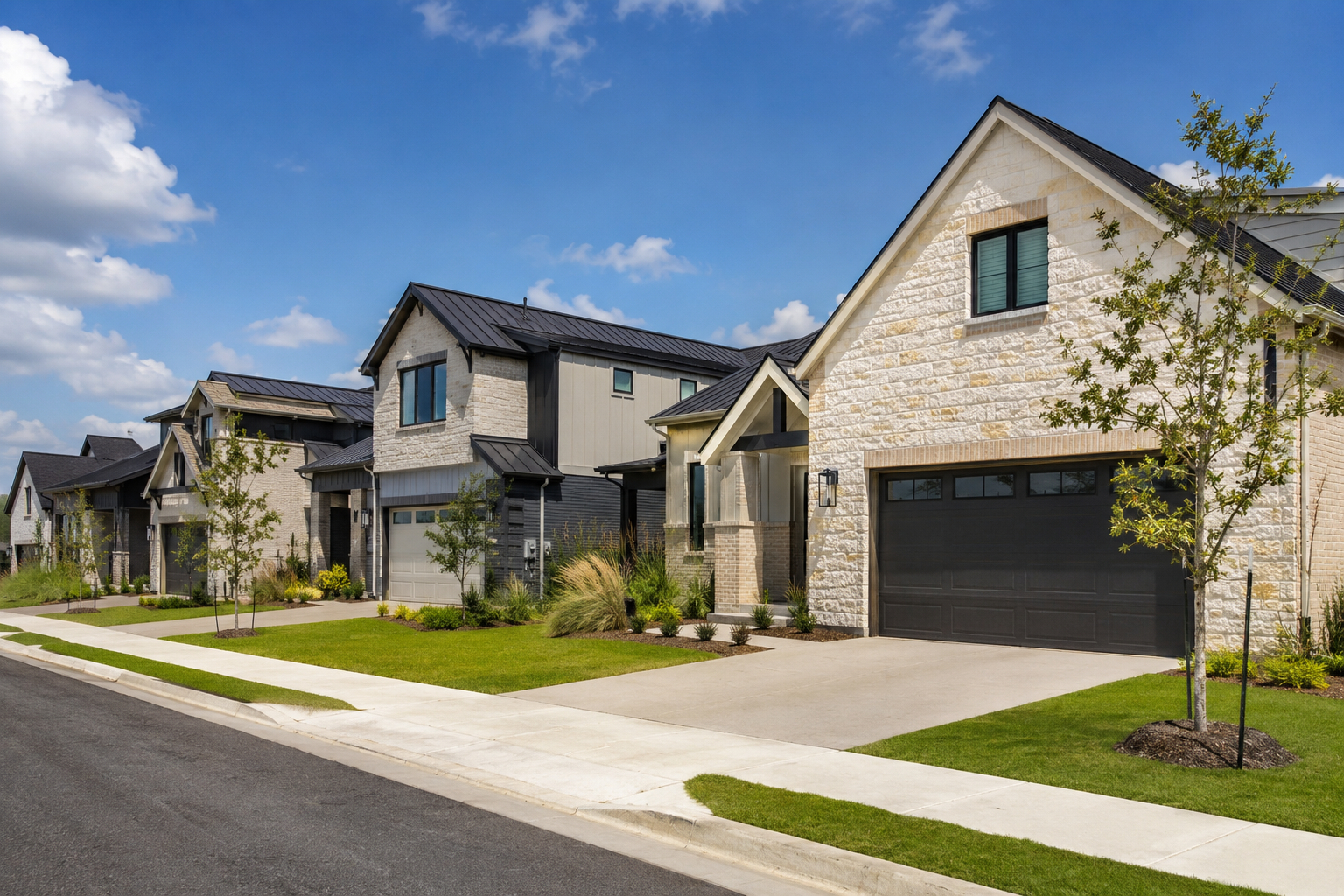
Buying a new construction home in Austin can offer opportunities that differ considerably from purchasing an existing property. Buyers may be able to select finishes, choose among floor plans, benefit from newer building systems and explore communities with recently developed amenities. At the same time, purchasing directly from a builder introduces its own contracts, timelines, fees and due diligence considerations.
Whether you are considering a custom residence, a newly built home in an established Austin neighborhood or a property within a larger master-planned development, understanding the process before visiting a builder's sales office can help you make a more informed decision.
Here are some of the most important things to know when buying a new construction home in Austin, Texas.
Is New Construction a Good Option in Austin?
New construction can be worth considering for buyers who value newer systems, contemporary floor plans and the ability to personalize certain aspects of a home.
Austin's new construction market is also diverse. Depending on location and development type, buyers may encounter everything from condominium and infill projects closer to central Austin to larger residential developments farther from the urban core.
The right choice ultimately depends on more than the home itself. Buyers should compare location, total ownership costs, construction timelines, builder terms, neighborhood plans and resale considerations alongside the property's features.
Do You Need a Real Estate Agent When Buying New Construction in Austin?
Buyers can work with a real estate agent when purchasing a new construction home, and having independent representation can be particularly useful when navigating a builder transaction.
It is important to remember that the builder's sales representative works on behalf of the builder. A buyer's agent can provide a separate perspective throughout the process, including when comparing properties and communities, reviewing available incentives, evaluating comparable sales and coordinating inspections and other due diligence.
Builder policies regarding buyer representation can vary. Buyers should consider contacting their real estate agent before visiting a new development or registering with a builder, as some builders establish specific requirements for agent participation.
Understand the Difference Between Production, Semi-Custom and Custom Homes
"New construction" can describe several types of homes, and the purchasing experience may vary substantially between them.
Production Homes
Production builders typically offer a predetermined collection of floor plans within a community. Buyers may have options for finishes, fixtures and structural upgrades depending on how far construction has progressed.
Semi-Custom Homes
Semi-custom construction generally provides additional opportunities to personalize a predetermined design. Depending on the builder, buyers may be able to modify certain layouts, materials or architectural details.
Custom Homes
A custom home is typically designed and constructed specifically for the buyer, often on an individually selected lot. These projects can involve architects, designers, engineers and specialized builders, creating a more involved planning and construction process.
Understanding which type of new construction you are considering can help set realistic expectations for pricing, personalization and completion timelines.
Compare the Base Price With the Actual Cost of the Home
One of the most important questions to ask when touring new construction is simple: What is included in the advertised price?
A model home may showcase finishes and upgrades that are not included in the builder's standard package. Depending on the property, additional costs could include:
Premium lots
Flooring or cabinetry upgrades
Countertop and appliance packages
Lighting and plumbing fixtures
Outdoor living features
Landscaping
Structural modifications
Smart-home technology
Window treatments
Additional storage or garage features
Ask for an itemized explanation of standard features, selected upgrades and any additional costs before comparing one property with another.
Are Builder Incentives Negotiable?
Builders may periodically offer incentives, but their availability and terms can change based on the property, development, construction stage and market conditions.
An incentive might take the form of closing-cost assistance, design-center credits, financing-related offers or pricing considerations on certain inventory homes.
Buyers should evaluate an incentive in the context of the entire transaction, rather than focusing solely on its advertised value. For example, a financing incentive should be compared with other available loan terms, while an upgrade credit should be evaluated against the actual cost and value of the selected improvements.
Ask what incentives are currently available, whether they require using an affiliated lender or title company, and whether accepting one changes other terms of the purchase.
Should You Get an Inspection on a New Construction Home?
A newly constructed home can still benefit from an independent inspection.
Municipal inspections and a buyer's independent home inspection serve different purposes. The City of Austin conducts inspections during the construction and permitting process to evaluate compliance with applicable codes and approved plans. Depending on the project, a final inspection may lead to a Certificate of Occupancy.
A buyer may also choose to hire a Texas-licensed inspector. The Texas Real Estate Commission establishes minimum Standards of Practice for licensed inspectors performing qualifying residential inspections.
Depending on the construction stage and advice from your real estate and inspection professionals, inspections may occur at different points in the building process. Buyers should discuss available inspection rights and timing before signing the builder's contract.
Review the Builder's Warranty Carefully
Many builders provide warranties for new homes, but coverage, exclusions, claim procedures and time periods can differ.
Before closing, review the warranty documents and understand:
What components are covered
How long different types of coverage last
What is excluded
How repair requests must be submitted
Who is responsible for warranty work
What deadlines apply
Whether dispute-resolution provisions are included
Do not assume every builder offers the same coverage. The Texas Real Estate Commission notes that it does not have jurisdiction over builders, making it especially important to understand the specific warranty and contractual protections associated with the home.
Understand Property Taxes Before You Buy
Property taxes should be part of the financial evaluation of any Austin-area home, but they deserve particular attention with new construction.
Do not assume that a previous tax bill, or taxes assessed when a property consisted primarily of undeveloped land, will represent what you will owe after the completed home is assessed.
Depending on the property's location, taxes may support several local taxing entities. Some Austin-area developments may also involve special districts or assessments.
Before purchasing, determine which taxing jurisdictions apply to the specific property and seek an estimate based on the completed home's anticipated taxable value rather than relying only on historical tax figures.
Ask About MUDs, PIDs and Other Districts
Buyers exploring new developments around the greater Austin area may encounter terms such as MUD and PID.
A Municipal Utility District, or MUD, is a type of special district that can provide infrastructure and services such as water, wastewater and drainage. A Public Improvement District, or PID, can finance certain public improvements through assessments on properties within the district.
These structures can affect the overall cost of owning a particular property. Buyers should determine whether a home falls within a special district, understand applicable taxes or assessments and review required disclosures before making a decision.
Because these obligations are property-specific, buyers should verify information directly with the appropriate taxing authorities and review relevant documentation rather than relying on general estimates.
Research the Community's Long-Term Plans
When buying into a developing Austin-area community, consider both what exists today and what is planned for the future.
Ask about:
Future construction phases
Planned roads and transportation improvements
Community amenities
HOA fees and responsibilities
Undeveloped parcels
Planned commercial areas
Infrastructure projects
Development timelines
Plans can change, so distinguish between amenities and improvements that already exist and those that are proposed or anticipated.
For properties within Austin city limits, buyers can also research permitting and development information through City of Austin resources.
Consider the Lot as Carefully as the Floor Plan
It is easy to focus on interior selections when buying a newly built home, but the lot can have a lasting impact on how a property functions.
Consider factors such as lot dimensions, orientation, grading, drainage, surrounding development, street placement and nearby land uses. If the development is still being built, ask what may eventually be constructed on neighboring lots or currently vacant parcels.
For custom and higher-end properties, buyers may also want to evaluate trees, topography, views and the relationship between the home's design and the site itself.
Review the HOA Documents
Many new construction communities have homeowners associations. Before purchasing, review the HOA's governing documents, fees and applicable restrictions.
Depending on the community, documents may address exterior modifications, landscaping, architectural standards, parking, common areas and other property-related requirements.
Buyers considering significant future changes, such as adding a pool, modifying landscaping or constructing an outdoor living area, should determine what approvals may be required.
Be Prepared for Construction Timelines to Change
If you are purchasing a home that has not yet been completed, the estimated closing date may change.
Weather, permitting, labor availability, material deliveries and construction sequencing can all affect completion. Buyers who are selling another property, relocating or arranging temporary housing should account for the possibility of schedule changes.
Review the contract carefully to understand how completion dates, extensions and closing requirements are handled.
Questions to Ask When Buying New Construction in Austin
Before signing a contract with an Austin-area builder, consider asking:
What is included in the base price?
Which features in the model home are upgrades?
What builder incentives are currently available?
Are incentives tied to a particular lender or title company?
Can I use my own real estate agent?
What inspection rights are included in the contract?
What warranty does the builder provide?
Is the property subject to HOA fees?
Is the property located within a MUD, PID or other special district?
What are the estimated property taxes on the completed home?
What future development is planned nearby?
What happens if construction is delayed?
Which selections can still be changed?
Are there additional lot or upgrade premiums?
What should I expect during the final walkthrough?
Having answers to these questions makes it easier to compare Austin new construction properties on more than appearance and advertised price.
Find New Construction Homes in Austin, TX
New construction gives Austin buyers a wide range of possibilities, from contemporary residences near the city's established neighborhoods to newly developed communities throughout the surrounding area. The details of the purchase, however, can be just as important as the design of the home.
Working with a knowledgeable real estate professional can help you compare properties, evaluate builder offerings and understand the factors that may influence both the purchase and long-term ownership of an Austin home.
Phyllis Browning Company combines local insights and industry expertise with more than 30 years of experience representing Texas real estate clients. Explore Austin new construction homes for sale or contact Phyllis Browning Company to begin your search for a new home in Austin.
Frequently Asked Questions About New Construction Homes in Austin
Is it worth buying new construction in Austin?
New construction may be worth considering if you value newer building systems, contemporary layouts, customization opportunities or specific community amenities. Compare the home's total price, taxes, HOA costs, location, builder terms and future development with comparable existing homes before deciding.
Do I need a real estate agent to buy a new construction home in Austin?
You are not required to rely solely on a builder's sales representative. A buyer can work with a real estate agent for independent representation during a new construction purchase. Because builder registration policies vary, consider involving your agent before your first visit to a development.
Should I inspect a brand-new home?
An independent inspection can provide additional information about a newly built property. City building inspections focus on code and permitting requirements, while a buyer-selected inspector evaluates the property under the scope of the inspection agreement and applicable Texas standards.
Can you negotiate on a new construction home?
Terms vary by builder, property and market conditions. Depending on the circumstances, builders may offer pricing considerations, closing-cost assistance, upgrade credits or financing incentives. Buyers should evaluate the total transaction rather than assuming every incentive represents the same value.
Are property taxes higher on new construction homes in Austin?
Not necessarily. Property taxes depend on factors including taxable value, exemptions and the taxing jurisdictions applicable to a particular property. Some developments may also fall within special districts. Buyers should investigate the specific property's projected taxes instead of relying on a generalized Austin tax estimate.
What is a MUD in Austin real estate?
A Municipal Utility District is a special-purpose district that can provide infrastructure and services such as water, wastewater and drainage. Properties within a MUD may be subject to district taxes, so buyers should review the specific obligations associated with a property before purchasing.