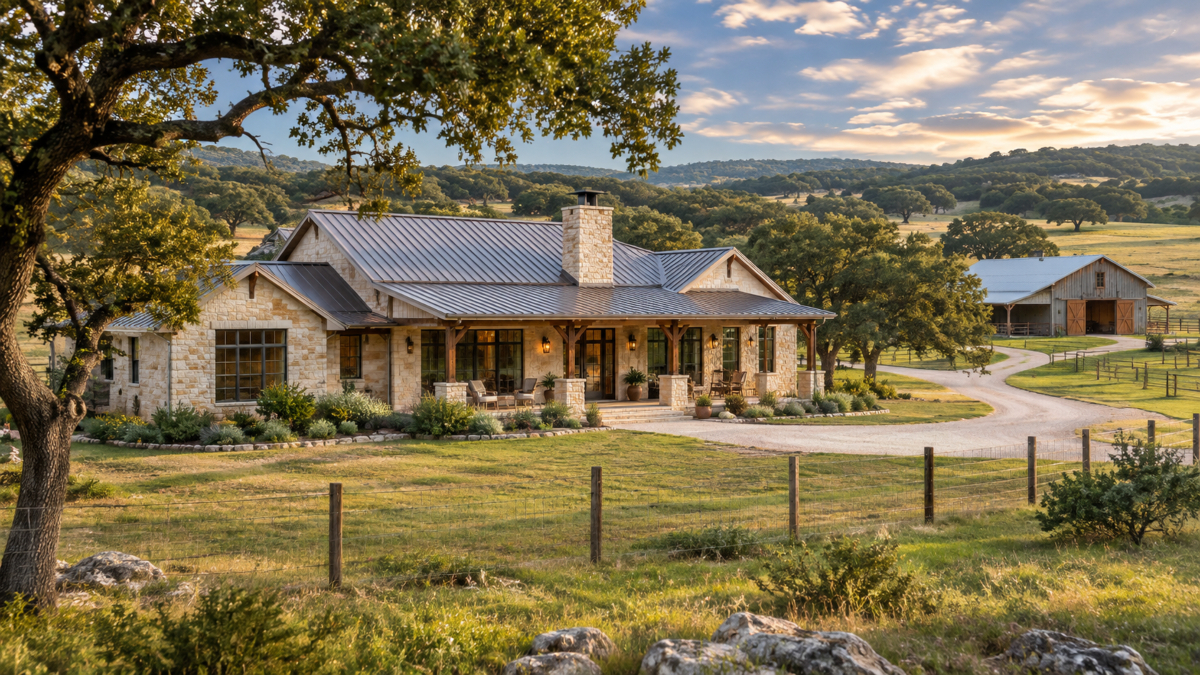
A home on a Texas ranch offers possibilities that extend well beyond the residence. You may envision keeping horses near Boerne, enjoying a weekend retreat outside Fredericksburg, or making a full-time move to acreage near Austin, San Antonio, or New Braunfels.
Financing that purchase begins with understanding the entire property.
A Texas ranch with a home may qualify for a residential mortgage, a specialized rural home loan, or farm and ranch financing. The appropriate option depends on the property’s characteristics, its use, your financial qualifications, and the lender’s requirements. Having a house on the land does not automatically make the purchase eligible for a traditional mortgage.
At Phyllis Browning Company, our Land & Ranch agents bring your property goals into the conversation early. By coordinating the search with your lender’s requirements, we guide you toward properties that fit both your plans and your financing approach.
Why a Ranch Purchase Requires a Different Financing Conversation
With a typical residential purchase, the home and its surrounding lot usually serve a straightforward residential purpose. A ranch may combine a residence with pastures, barns, livestock facilities, leased acreage, or recreational improvements.
Those additional features influence how a lender evaluates the property.
For example, Fannie Mae requires eligible properties to be residential in nature and identifies agricultural properties, including farms and ranches, as ineligible for its mortgage purchases. That distinction applies to Fannie Mae’s programs, rather than every financing option available to buyers.
The practical question is how the lender classifies the specific property. A listing described as a “ranch” may function primarily as a residence on acreage, while another property supports a substantial agricultural operation.
Your Phyllis Browning Company agent gathers available property information and coordinates questions about existing uses and improvements. Your lender determines whether the property fits its loan program.
Start With How You Intend to Use the Property
Before narrowing your search, discuss your intended use with both your agent and lender.
Are you purchasing a primary residence with room for personal recreation? A second home for occasional visits? A horse property? A working ranch with agricultural income?
These distinctions matter because lenders offer different products for different purposes. Texas lenders publish separate programs for rural homes, agricultural land, and recreational properties. Eligibility varies by program, including whether income-producing agricultural activity is permitted.
Your agent translates those priorities into a focused property search. A buyer seeking a full-time residence near New Braunfels may need a different combination of improvements and services than someone purchasing a recreational ranch outside Fredericksburg.
Clarifying the purpose early gives the lender a more accurate picture and makes your property search more productive.
Understand the Main Financing Options
A Residential Mortgage for an Eligible Home on Acreage
Some homes on acreage fit residential mortgage programs. The lender must evaluate the property against the requirements of the specific program, including its residential character, condition, access, utilities, and intended occupancy.
Outbuildings deserve particular attention. Fannie Mae’s guidance calls for lenders to consider whether barns and other structures indicate an agricultural property. Their presence requires evaluation rather than an assumption about eligibility.
Share the listing and property details with your lender early, especially when barns, additional residences, or business uses are involved.
A Specialized Rural Home Loan
Rural home financing may accommodate properties that fall outside a lender’s standard residential offerings.
For example, Texas Farm Credit advertises rural home programs for homes on acreage, including certain nontraditional home types. Capital Farm Credit also offers rural home financing and describes programs without acreage restrictions, subject to its lending requirements.
These programs are worth discussing when the residence is central to the purchase, but the acreage or improvements require a different lending approach.
Farm and Ranch Financing
When the purchase centers on agricultural land, ranch operations, or a broader rural property, farm and ranch financing may be more appropriate.
Texas lenders offer land loans for purposes including grazing, agricultural production, recreation, and future homesites. The lender must confirm whether its proposed financing covers the existing residence and other improvements as part of the purchase.
Your agent coordinates property information with the lender so the discussion reflects what you are actually buying.
Compare Loan Terms Beyond the Interest Rate
There is no single down payment, interest rate, or repayment structure that applies to every Texas ranch purchase. Request written terms for the specific property and program under consideration.
When comparing offers, discuss:
Down payment and cash to close: How much cash is required, including closing costs and any reserves?
Interest rate: Is it fixed for the entire loan term or subject to adjustment?
Repayment schedule: What are the payment frequency and amortization period?
Loan maturity: Will scheduled payments fully repay the loan, or will a remaining balance become due?
Fees and early payoff provisions: What charges apply at closing or if you repay early?
Property coverage: Which acreage, parcels, buildings, and improvements secure the loan?
For covered residential mortgages, the Loan Estimate provides a standardized way to compare important terms and costs. Ask lenders what disclosures apply to their proposed ranch financing and request comparable written information.
Pay particular attention to the difference between amortization and maturity. A loan’s payments may be calculated over a longer period than the time allowed to repay it. If a balloon payment is involved, a substantial balance becomes due at maturity. Future refinancing should never be treated as assured.
Expect an Appraisal That Reflects the Whole Property
A ranch with a residence may include several features that contribute differently to its market value: acreage, the home, barns, fencing, water infrastructure, and other improvements.
Comparable sales also require careful selection. Fannie Mae’s appraisal guidance recognizes that rural properties may have fewer recent, closely comparable sales nearby.
Your Phyllis Browning Company agent provides available property information and market context when requested, while the appraiser independently develops an opinion of value and the lender evaluates it.
This distinction matters when considering a property with extensive custom improvements. Construction cost, asking price, and appraised market value may differ. Discuss with your lender how an appraisal below the purchase price would affect the proposed financing.
Coordinate Property Review With the Financing Timeline
A ranch purchase involves several parties, each with a distinct responsibility.
The lender evaluates financing eligibility. The appraiser assesses value. The title company examines title matters. Inspectors and other specialists evaluate relevant conditions and systems.
Your Phyllis Browning Company agent coordinates the transaction around these steps, requesting available documents, tracking contractual milestones, and keeping questions moving to the appropriate professional.
Depending on the property, requests may include:
Surveys and legal descriptions.
Information about road access and maintenance.
Details about wells, septic systems, and utilities.
Records for residences and other improvements.
Existing leases or agricultural uses.
Property tax and agricultural appraisal information.
Texas A&M AgriLife identifies these subjects as important considerations in rural land purchases and recommends involving qualified professionals to evaluate infrastructure and property rights.
An early financing conversation gives these reviews a clearer direction. Ask whether your lender’s preliminary assessment covers only your financial qualifications or also the property you intend to purchase.
Keep Agricultural Tax Valuation Separate From Loan Approval
A property advertised with an “ag exemption” raises a separate question from mortgage eligibility.
Special agricultural appraisal concerns property taxation. Loan approval concerns the lender’s requirements for the borrower and property. Neither establishes the other.
Some rural lenders advertise financing that accommodates existing agricultural valuation. However, maintaining that valuation depends on applicable qualifications and appraisal-district requirements, rather than the lender’s approval alone.
Your agent gathers available tax information and identifies questions for the county appraisal district. Your lender explains how the property’s agricultural use affects its financing review.
Explore Texas Ranch Properties With Phyllis Browning Company
Financing is one part of finding the right ranch. The property also needs to support your plans for the residence, the land, and daily ownership.
Phyllis Browning Company’s Land & Ranch agents guide buyers exploring properties near Austin, San Antonio, New Braunfels, Boerne, and Fredericksburg. We listen to your priorities, bring local market knowledge to the search, and coordinate the property details with the professionals involved in your purchase.
Explore Texas Land & Ranch properties to begin your search.
Frequently Asked Questions
Can I use a traditional mortgage to buy a Texas ranch with a house?
Possibly, if the property meets the selected residential loan program’s requirements. The presence of a house alone does not establish eligibility. A primarily agricultural property may require a different financing product.
Is there one acreage limit for financing a home on a ranch?
No single limit applies across all lenders and loan programs. Some rural lenders advertise programs without acreage restrictions, but property eligibility and borrower qualifications still apply.
Can the home, barns, and land be financed together?
Depending on the lender and program, they may be included in one transaction. Ask the lender to confirm exactly which parcels and improvements are included in its proposed financing.
Should I speak with a lender before choosing a ranch?
Yes. Early discussions establish a financing direction and identify property features that need further review. Your agent then uses that information to focus the search and coordinate the purchase.